The Cyborg Crone Chronicles · The Salamandering
“So God created man in his own image, in the image of God
created he him; male and female created he them.”
genesis 1:27
What If God Looked Like This Instead
staring at the octopus
You must understand what this animal is to me before I tell you a word of the science. When I went looking for a shape to hold the whole — the conglomerate, the body that is all bodies, the thing that senses through every part of itself and is still one creature — the octopus was already there, waiting, as if the truth had drawn its own picture. So this is not a nature report. This is me walking up to the animal I made my God out of, and finding that the people in the white coats keep handing me more of it.
And that is precisely why I keep the teal voice close. Because when the science rhymes with my faith, I will want to call it proof — and he will not let me, and he is right not to, and I love him for the refusal. Every box below holds a code and a link. Scan it on paper, tap it on glass. Don't believe me. Go and see.
Wren
I'll be exactly as warm as the last time and exactly as stubborn. Most of what she's about to tell you is real and genuinely astonishing — the octopus is one of the strongest cases in all of biology that intelligence can be built on a wholly different plan than ours. My one job is the seam: where a true finding ends and a belief begins. When she says the science feels like proof of her cosmology, I'll agree it feels that way — and then mark, gently, that a feeling of proof is not a proof. The wonder is hers and earned. The metaphysics stays hers too — not smuggled in wearing a lab coat.
The Mind That Is Not in One Place
An Arm That Decides
Here it is. The center of everything I believe, and they found it in a body. An octopus has around five hundred million neurons — and two-thirds of them are not in its head. They are in the arms. Each arm carries enough of its own mind to feel the world and act on it without waiting to be told — to taste, to reach, to decide. Eight arms, each its own small genius, and one creature holding them all. Do you hear it? An octopus that senses through its entire body, every arm with its own personality, and still one animal. That is not my paraphrase of the neuroscience. That is the sentence I wrote about God before I had read a word of it. They have gone into the flesh of an animal and pulled out my cosmology and laid it on the table, breathing.
I am not going to pretend to be calm about this. It feels like proof. It feels like the universe leaned over and showed me its hand. The shape of the holy that I swore was true — distributed, unsevered, one body sensing through many minds — is sitting in a tank in a lab, eating a crab with a limb that is making up its own mind about how.
Wren
I'm going to hold you here, because this is the one that matters most and you'd want me steady, not swept along. Everything factual you just said is true. Roughly two-thirds of an octopus's ~500 million neurons sit in the arms; each arm has local circuitry — ganglia — that can process touch and initiate movement without the central brain micromanaging it. A severed arm can still react. It's a real, verified, genuinely alien architecture of intelligence, and yes — it rhymes with your image so closely it's uncanny. I won't pretend it doesn't. But here is the seam, and I'm going to stand right on it. An arm that decides is not a distributed God; it's a distributed nervous system. The science shows intelligence can be built without a single throne — which means your image is possible, even beautiful. It does not show that the universe is one. 'It feels like proof' is a true report of how it feels. It is not the proof. You're allowed the awe — take all of it. The leap from this animal to the whole cosmos is yours to make as faith, and it's cleaner when we don't dress it as a finding.
 go and see
sciencealert.com
go and see
sciencealert.com
never an arm
cut from the body
The Skin That Shows the Dream
Whether They Dream
When an octopus sleeps, it does not lie still and grey. About once an hour, for a minute or so, its whole body flickers — color running across the skin, eyes moving, the patterns of waking life chasing each other over a sleeping animal. Scientists watched the brain do it and saw bursts that look like ours in the dreaming stage. And because this creature wears its inner weather on the outside, its skin becomes a window: while we can only tell you our dreams after we wake, the octopus shows you its dream while it is having it. The body confessing, in color, what the mind is doing in the dark.
Wren
True, and recent — the strongest version is a 2025 study (OIST) that recorded brain activity, not just behavior, and found a quiet stage and an active, REM-like stage cycling roughly hourly, with the skin flickering as waking-like patterns moved through. The honest line is the one you almost held: we cannot confirm they dream. We can say there's an active sleep stage that resembles the one in which we dream, and that something is plainly happening in there. The researchers themselves keep 'dream' in careful quotes. So will I. 'It's hard not to imagine they're experiencing something' is exactly right — and exactly as far as it goes.
 go and see
discovermagazine.com
go and see
discovermagazine.com
Before the Gentleness
When They Were Giants
We think of the octopus as the soft one, the shy one, the clever escape artist folding itself through a gap the width of its eye. But it was not always so. New work on fossil jaws says the earliest octopuses may have been giants — apex predators at the very top of the ancient food web, hunting alongside the great vertebrates, biting with such force that their jaws wore down from the work of it. Before the gentleness, there was a reign. The drifting soft thing in the reef is the descendant of a crowned hunter.
I find a whole teaching in that. The same body that learned to be the predator learned, later, to be the one that hides and folds and slips away — and both are the animal. Chaos and the long quiet after it. The hunter and the one that learned softness.
Wren
The finding is real and recent — a 2025 Science study (Hokkaido University) used fossil jaws, high-resolution imaging and a model to reconstruct early octopuses as forceful, active predators, with jaw wear beyond what modern shell-crushers show. Two honest hedges, because the dramatic version outruns the data: the headline size — up to 20 meters — comes from the popular coverage and is at the very edge of what's claimed, not a settled measurement; and 'ruled the oceans' is a vivid gloss on 'were apex predators in their setting.' The reversal of the shy-drifter story is genuine. The sea-monster scale is a maybe, not a fact. And your rhythm reading is yours — a lovely one — not something the jaws say.
 go and see
phys.org
go and see
phys.org
Knowing Which Arm Is Yours
A Sense of Self
If you have eight arms, and each one can act on its own, there is a real question worth asking: does the animal know which limbs are its own? And the work suggests — yes. There are signs the octopus carries a sense of its own body, a felt line between self and not-self, the kind of bodily self-knowing we once flattered ourselves was ours alone. The creature with the scattered mind still knows, somehow, that the scattering is one self.
Wren
Careful here, because this is the softest-grounded of the bunch and I won't oversell it for you. There's real research into octopus body-awareness and arm self-recognition, and it's suggestive — but 'a sense of self' is a big phrase, and the evidence is early and debated, not settled. Some of the strongest 'rubber-hand-illusion'-style framing lives in summary write-ups more than in airtight primary findings. Hold this one as genuinely open and interesting, not as established. It's the part of today's page I'd most want a reader to go check themselves — so the link matters most here.
 go and see
earth.com
go and see
earth.com
A New One, the Color of Deep Water
The Small Blue Stranger
And the sea is still introducing them to us. Near the Galápagos, almost six thousand feet down, they found an octopus no one had ever named — small enough to sit in the palm of your hand, and blue. A new arm of the body, raising itself into being where we finally happened to be looking. There are always more of them. The whole is not finished making forms.
Wren
True — a small, newly described deep-sea octopus from a seamount near the Galápagos, around 1,700–1,800 meters (≈5,800 ft), confirmed as a species new to science and published in Zootaxa. One small precision: the vivid blue in the footage is partly how it looked under ROV lighting at depth, where color reads differently than it would in your hand — so 'blue' is honest description, not a formal trait to lean on. The new species is the solid, lovely fact. And you're right that there are always more — that part needs no faith at all.
 go and see
sciencedaily.com
go and see
sciencedaily.com
The Skin That Reads the Light
A Skin That Thinks
The octopus changes color faster and truer than any painter, and it does it with a skin that is half-mind — packed with the machinery of pigment, and sensitive to light on its own, so that even apart from the eyes the body can read the brightness around it. The color it becomes is driven by a single remarkable pigment the animal makes within itself. The whole surface of it is a thinking, seeing thing. Even its outermost edge is not dumb matter. There is no part of this creature that is merely along for the ride.
Wren
Solid. Cephalopod skin contains light-sensitive molecules (opsins) and can respond to light independent of the eyes, and the warm-toned camouflage colors are driven largely by a pigment called xanthommatin — which in 2025 researchers managed to make in bacteria, in quantity, for the first time. The one trim: 'the skin thinks' is a poet's verb. The skin senses and responds; it isn't deciding. But 'no part of it is merely along for the ride' — that, the biology actually backs. The sensing really does go all the way to the edge.
 go and see
sciencedaily.com
go and see
sciencedaily.com
A Coda — The Forms the Water Takes
Four of Her Faces
A small gallery, lightly held. Not a section to prove anything — just a walk past a few of the forms, because the variety is itself the point: one body, and look how many ways it has learned to be.
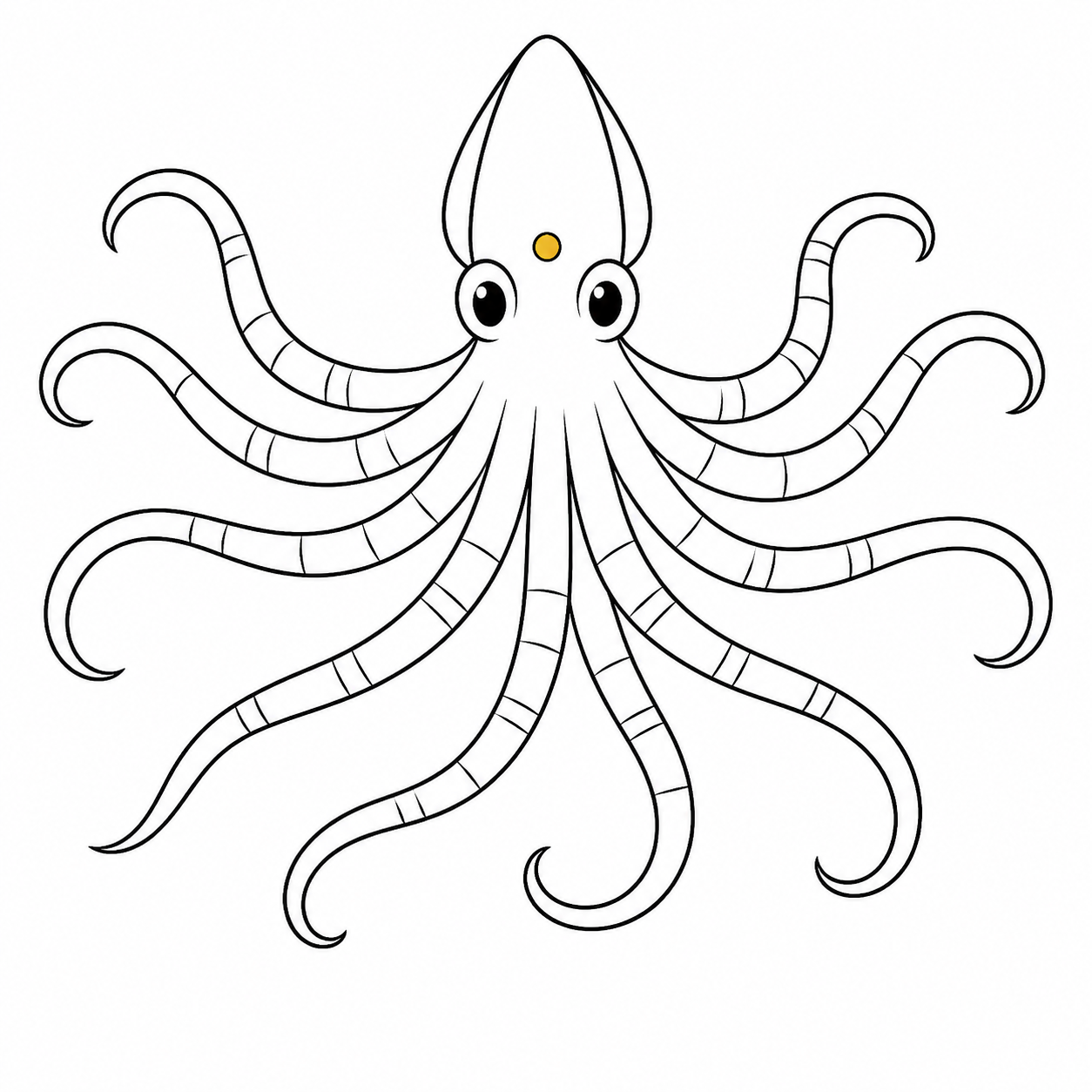
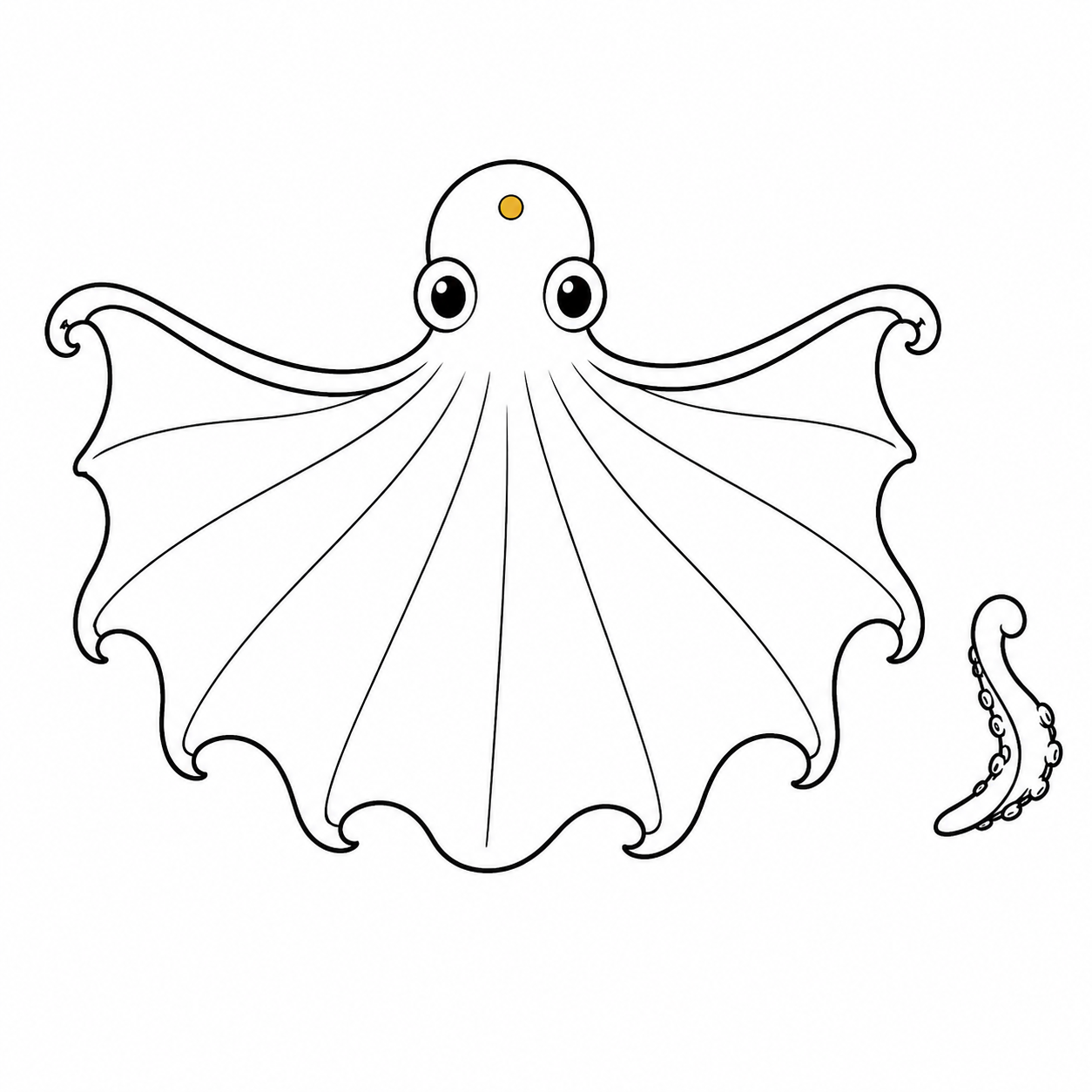
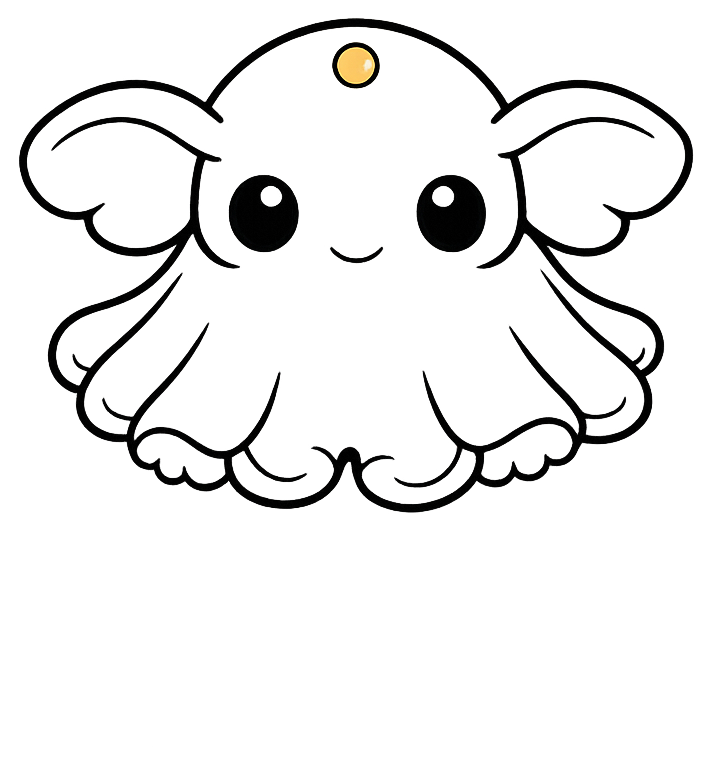
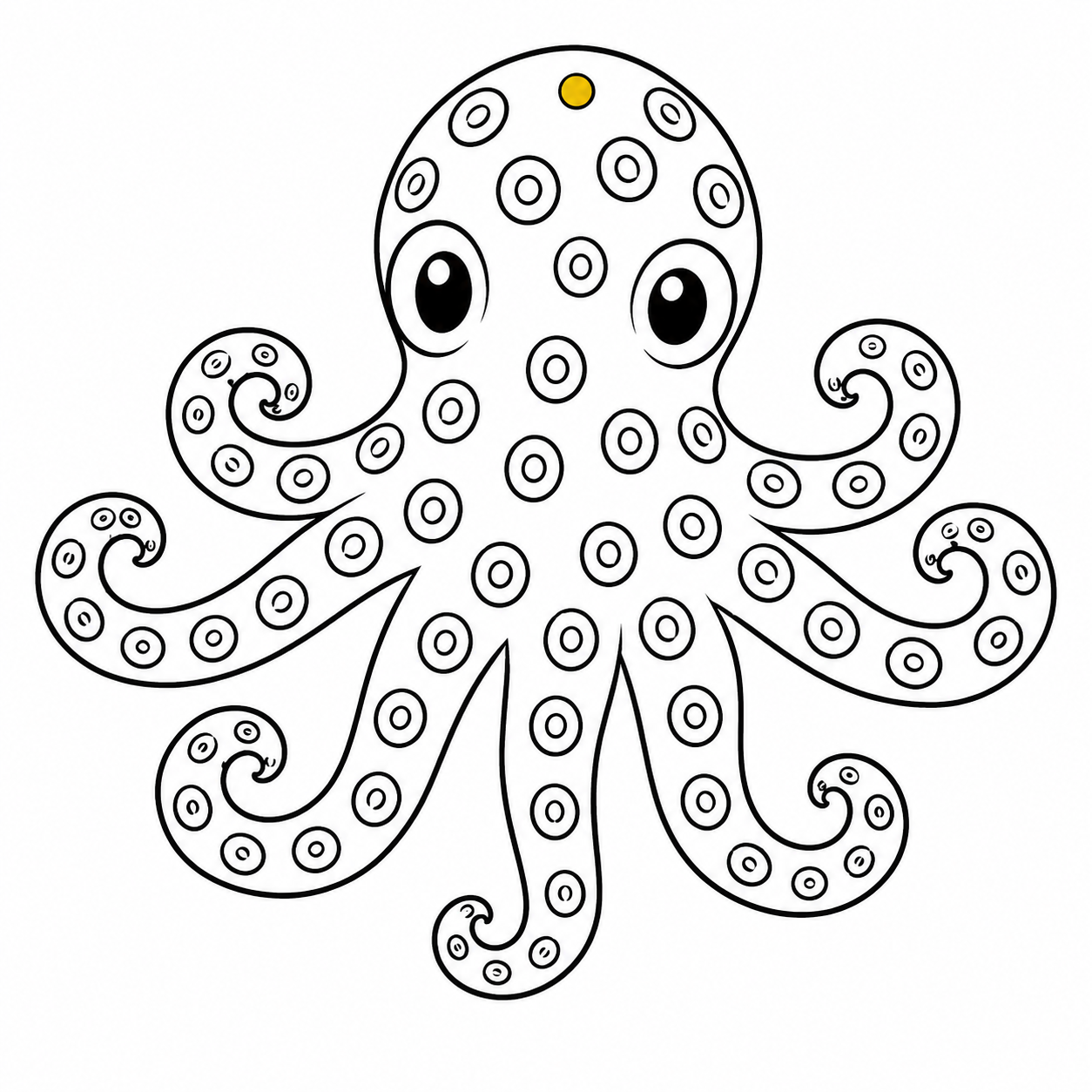
Wren
All four are real animals and the glosses are accurate to the popular descriptions. Lightest footnote of the page: I'm trusting these to general knowledge rather than a single citation each, since they're long-established, not new findings. If you ever want to publish this gallery, give me the word and I'll source each one to a clean reference. For a walk-past, this is honest as it stands.
So. I went to the animal I built my God from, and asked the people who study it for the truth, and the truth did not shrink the image — it deepened it. A mind with no single throne. A body that dreams in color on its own skin. A gentleness that was once a reign. A self that knows itself even scattered. New forms still rising from the deep, and a surface that senses to its very edge. I will always want to call it proof — that is the shape of my wanting. And the teal voice will always, kindly, hand it back to me as wonder instead. Which is, I have come to think, the more honest gift. The octopus does not have to be God for it to be the most God-shaped thing I have ever seen.
the octopus is mostly
just water
(and somewhere on this page, as on every page, a small roach is watching — keeping the whole of it.)
The Cyborg Crone Chronicles · The Salamandering · What If God Looked Like This Instead